Tuesday, November 24, 2009

A House Divided: Ballmer & Murdock Banking on Divisions


"This move will make content worth more, that means the impetus towards the implementation of Digital Rights Management and trade agreements like ACTA will carry more force than ever. I believe this action by these two dinosaurs is more about freedom of speech than a war for market share. It puts the brakes on the unparallelled volume of free expression in society. As we head further into the economic crisis, I see the progress of new levers against civil rights, a strategy that benefits the really big players at the expense of the small.

This move by two of the most backward business models I can think of - Microsoft's DRM and Fox News's debasement of the craft of journalism - might have an ominous agenda behind it."

Steve Ballmer CEO of Microsoft is going to pay Rupert Murdock's News Corporation to not allow Google Search to list it's content.

From the Business Insider, Silicone Valley Insider:

"..FT reports that Google’s UK director Matt Brittin told a conference last week that Google did not need news content to survive.“Economically it’s not a big part of how we generate revenue,” he said.

For another, we can't imagine links to worthwhile stories originating from News Corp not finding their way onto sites that will happily remain indexed in Google's search engine free of charge."


Like, through Blogs? Many times in the last 5 years I have pointed to attributions and references through links; if lawyers for 'Micro-News' come after Google to deaden my links - the veracity of my content is destroyed and my credibility is killed. Unfortunatly I don't have a case in court either, the only value that this site has is it's contribution to the public good. :-(

From By Matthew Garrahan, Richard Waters and Andrew Edgecliffe-Johnson writing in the Financial Times, which broke this story,

"However, the Financial Times has learnt that Microsoft has also approached other big online publishers to persuade them to remove their sites from Google’s search engine.

News Corp and Microsoft, which owns the rival Bing search engine, declined to comment.

One website publisher approached by Microsoft said that the plan “puts enormous value on content if search engines are prepared to pay us to index with them”.

Microsoft’s interest is being interpreted as a direct assault on Google because it puts pressure on the search engine to start paying for content."


Every one is concentrating on search engine wars...

Graph courtesy Alexa

..but I'm taking something different from all this. I predicted in my first post on Web 2.o, in December 2006, that there were several vectors in play that would devalue content going forward.

I wrote,
"Content is not worth much in this new sphere - but I think this was bound to happen anyway. In the old sphere of Broadcast Television which turns 60 years old in America this year, the amount of content amassed by producers is mind-boggling. Supply and demand economics function in the world of media too. Already this content is being recycled into history productions; every new-year we see The Year in Review shows that re-use content from the day before at one point; popular culture 'retros' the recent past with an almost a scientific precision. As the content silo gets higher, old content becomes new again - so supply will increasingly outweigh demand. Content will get cheaper and cheaper until it is worth about as much as it costs to make - which is declining."


This move will make content worth more, that means the impetus towards the implementation of Digital Rights Management and trade agreements like ACTA will carry more force than ever. I believe this action by these two dinosaurs is more about freedom of speech than a war for market share. It puts the brakes on the unparallelled volume of free expression in society. As we head further into the economic crisis, I see the progress of new levers against civil rights, a strategy that benefits the really big players at the expense of the small.

This move by two of the most backward business models I can think of - Microsoft's DRM and Fox News's debasement of the craft of journalism - might have an ominous agenda behind it.

I can image this will cause a great divide between writers who support open source movement and liberal copyright laws - and writers who feel the revolution is a threat to their livelihood. Mr. Murdock is trying to create an apocalypse in journalism. When he broke the unions of Fleet Street back in the 1980's I assumed his raison detre was money. When he used his non-union millions to start buying every outlet on the planet, I assumed his agenda was power. After what he has done at Fox News I now know I underestimated his end game. The way Murdock has been running journalism into the ground - by taking every paradoxical element to the nth - suggests to me he's in bed with the Straussians, the brain trust around the G.W. Bush Administration, who see (an advantage in?) a global apocalypse - with radical depopulation, an unending war on terror, the end of the middle class and especially, an end of Liberal Democracy.

You know, Fascism.

So, this leaves me asking, who in the hell is this Steve Ballmer guy and why hasn't the good Mr. Gates fired him already?


mh

Monday, November 23, 2009

Tending the Web 2.0 Garden: WebSquared, Popsicle Sticks and Glue


"I've been noticing that there are old analogue technologies (pen and paper, the cassette player/recorder, Popsicle sticks and glue), that offer unique qualities that the relevant technologies available on the web don't provide - they have a flexibility that can add to ones creative functionality. The utilization of these analogue devices act as a signature of human presence - they are a part of a physical dynamic - they thus guarantee individuality in the web. This I think also produces an ethereal human quality in the mix that cannot be formula-ized. It creates a fingerprint (in a good way) of people input - human data.

I think it adds a fifth dimension to the Platform Commons cornerstones - a human dimension - a Spirit Commons. A Ying Cornerstone to the Automata Cornerstone Yang."


Applications emerging in Web 2.0 are creating content that is beginning to form the Cornerstones of the Next platform. I'm calling these Cornerstones "Platform Commons".

Several layers of these 'Commons' already exist, but we are unaware of them as we work the internet with our new-fangled applications.

For example, humans 'typing' over the past 10 years have created an Information Commons; the sum of human knowledge, science, art, culture. The first data came from the centres of higher learning, professors and undergrads who uploaded and organized data to use in teaching and research. Then Tim Berners-Lee thought it would be a good idea to link the whole world, to better work in his job, at CERN, so he suggested www protocols, and the internet was born.

Now the data stream and the human need/ability to organize stuff came piling in; email, daily online media, government websites, porn, the bloggosphere. Together these things connected, constitute a Platform Commons - upon which Web 2.0 flowered.

I've gleaned this map from reading a little at O'Reilly Radar. Tim O'Reilly coined the term Web 2.0. Web 2.0 is a set of understandings that have propelled the growth of the internet to where we are today. In Tim O'Reilly's words,

"Chief among our insights was that "the network as platform" means far more than just offering old applications via the network ("software as a service"); it means building applications that literally get better the more people use them, harnessing network effects not only to acquire users, but also to learn from them and build on their contributions."

Tim O’Reilly and John Battelle have now out lined an intuitive vision of the next phase in the growth of the internet. The vision summery is "WebSquared: Web 2.0 Five Years On".

My 'flower on Web 2.0' idea is my way of putting it; this flower is in the process of exponential growth, it's becoming a field of flowers ney, a world of flowers. A Hippie I am not, but I'll accept my own metaphor, I kinda like it. It speaks to what Tim O'Reilly said in January 2009, "Do stuff that matters."

My idea, after some but careful reading is that this WebSquared period will build the platform that will support the next thing that the web is becoming, something still 10 or so years ahead and unfathomable now.

I build maps like this to help me formulate and express ideas, from it I have gleaned a few new metrics about where we are, and where we might be going...


Now, social networking is building a new Platform Commons. Together with the hand-held internet or 'always-on' technology, (Blackberry was first-big; I-Phone later but neater) with sensors: up-down, position, inertia, a camera 'eye' and 'ears' - and an identity - through real time networking of all available data in the Google search colossus - a new Platform Commons is forming and it has unique characteristics.

I call it an Automata Commons. It's a new kind of flower on the platform. The Platform Atomata Commons seems like a scary one to me, it's all machine. It automatically inputs data that the user is unaware of, it uses these sensors to input data It chooses is relevant, based on software that's learning what it thinks You think is relevant... .

A counter point to this automata type data is in the offing thankfully. I've been noticing that there are old analogue technologies (pen and paper, the cassette player/recorder, popsicle sticks and glue), that offer unique qualities that the relevant technologies available on the web don't provide - they have a flexibility that can add to ones creative functionality. The utilization of these analogue devices act as a signature of human presence - they are a part of a physical dynamic - they thus guarantee individuality in the web. This I think also produces an ethereal human quality in the mix that cannot be formula-ized. It creates a fingerprint (in a good way) of people input - human data.

I think it adds a fifth dimension to the Platform Commons cornerstones - a human dimension - a Spirit Commons. A Ying Cornerstone to the Automata Cornerstone Yang

I think we might all really need this idea right now; things seem to be spiraling in complexity a little too fast. It getting crazy. Friends of mine who I Know have brains are hiding inside Facebook playing games, I haven't seen them out here for months. Occasionally I get a message from the robot holding a friend of mine: "Colin has just gotten a free bag of fertilizer at the county fair."

Twitter, on the other hand, is a brilliant application and I think it will be an important part of something greater. I hope the bank that gave Twitter.com the tooling-up money they needed - when it started to explode to Facebook proportions - don't expect to get that money back soon. I think monetizing Twitter right now is going to be difficult for two reasons;

  • First, it needs to be left to it's own emergence - the Twitter community still hasn't decided what it's going to be.
  • Secondly until the real Twitter emerges, pin pointing targets and long tailing them will be difficult.

Add to that the current economic conditions. Advertisers can not tolerate many practice tries - the ads will either work or advertising revenues will plummet. Twitter is concise because of it's brevity; choosing who to follow and who is spam is easy. Ads will have to be relevant and pointed at the right people or they'll have little effect.

I think the culture of Twitter users understands these fundamentals better than the brain-trust at Twitter does. Last year Twitter tried to insert ads that looked like Tweets, the community reacted with a vengeance. They stopped.

This may be a time when users of social media begin to pull back their use a bit; get back to the things they know - a little terra firma - like talking on the cell or emailing your mom - or good 'old' blogging? 8-).


mh

Sunday, November 22, 2009

What is the UberApp? Where is the UberApp?


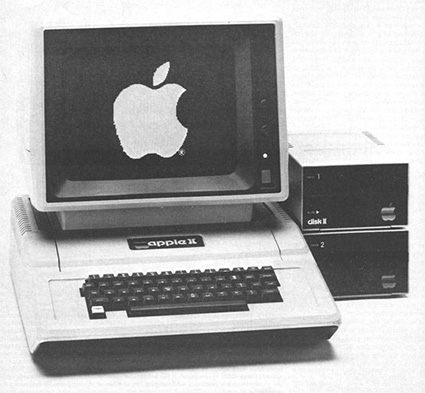
My father became involved with applying the new magnificence and speed of the silicon chip back in 1977 - I was 14. I remember gazing into the distance one afternoon back then and realizing, "I get it". I understood his passion for the thing; I had gleaned a 'Rumsfeldian slice' of the potential of microprocessing. A few years later I took a computer course in high school - the first of it's kind - where we wrote a sequence of 'goto' commands on a Apple ll PC. When you selected a 'y' or 'n' the program we'd written would select the appropriate tine in a fork and 'goto' the correct line in the program, then the computer would flash up the 'right' answer in ugly green letters.

Image courtesy engadget.com.

I was not impressed and picked up a guitar instead. I thought the internet was an unfriendly niche for geeks that had different minds than mine. I always kept up with the progress of the thing though, the PC, the internet; but I felt I had no way 'in'. In 2000 I became aware of the Google search engine and I thought, "brilliant, this is it!", but still, I had no way 'in'. In 2003 a fiend showed me blogger.com and I was off to the races - I had a quarter century of catching up to do.

The evolution of social networking technology, especially Twitter have gotten me considering an idea that's been simmering in the back of my mind ever since that Rumsfeldian epiphany back in 1977. I've tried to express the coming sudden intuitive leap of understanding I'm looking for in pieces I've written here related to Tim O'Reilly's 'Web 2.0' idea. I've compared it to the industrial revolution: the steam engine was the silicone chip of its day - the vista operating system may be compared to the Ford Edsel some day 8-). (Hey! That's Groucho! (-that's not a period - it's a cigar!)).

(Image: Time.com).

The Ford Edsel, the Microsoft Vista of it's day. Looked really sharp but never ran properly, cost it's owners buckets of money to keep on the road.

We've come a long way and much more quickly than the industrial revolution moved forward a century ago; and although we have gotten to the 'gas turbine engine' in micro processing speed, the F-22 of applications still eludes us.

That intuition I have - that thing that is so-close-you-could-touch-it, the F-22 of applications - has a name I needed to help me think about it. My possible neologism:

UberApp.


Today a method came to me to recognize it - distinguish it in the gale of new applications we are inventing, and the swirl of new ways we are applying them.

It's simply a series of questions I ask when I comes across an ingenious new application; or someone's ingenious new way of using one, or several applications in combination (which happens about 20 times a day on Twitter):

  • What is the uber-app?
  • Can we see it now?
  • Can we simply gather the elements of it together - and by placing them in the proper order - create it?

If not, how can we find it?

  • What do we think it will it look like?
  • What will it do?
  • What do we want it to do?
  • What do we need it to do - right now?
  • What are our dreams of it?

Now, back on my Twitterboard to try it out... .


mh