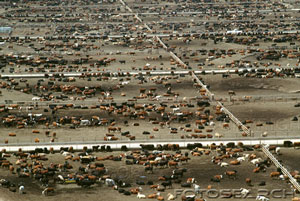
 Photo linkZoonotic is defined as a disease which can be passed from animal to human. All humans at any given time have a variety of these pathogens and defenses against them(antigens) with-in our stomachs, as a part of our immune system; both can cause deteriorating health and death.
Over time the whole of human civilization individually build defences to these pathogens; but at a price, sometimes taking the form of a mass death epidemic.
The rate of increase in the incidence and variety of zoonotic pathogens in our food supply at the present time is alarming the experts.
The Centers for Disease Control and Prevention concludes with respect to the new abundance of these zoonotic pathogens, "...public health concerns must now include the safety of what food animals themselves eat and drink." This suggests a return to an old standard of how we husband livestock.
The standard inspection regime right now is, if the animal appeares healthy at the slaughter house door - if it can stand steady, has a normal temperature, is not showing outward signs of ill health - it is considered fit to eat by humans. But with the help of antivirals, antibiotics, and Antimicrobials, Livestock are adapting to pathogens in unsanitary conditions; so they look healthy while the diseases they harbour are deadly.
So the old way of ensuring public health, including these casual 'check-up' style inspections and line inspections to ensure no fecal matter comes in contact with slaughtered meat - is now insufficient. Even Kosur or Halal type slaughter regimes will not protect us from these new emerging pathogens that are developing in the barnyard.
Livestock are adapting to new pathogens at a rate faster than humans are adapting to new pathogens in their diet. This is due the inhuman conditions in which we raise livestock, in cattle barns and feed lots; to global food distribution, which introduces new pathogens to new populations of animals and humans; and to underfunded health networks, which undermine our ability to cope with crisis.
As we've seen this summer and fall, the effluent running off these production sites into our waterways are funneling new pathogens into produce growers water supplies and then into the produce food chain as well.
Animal husbandry is a term you don't hear alot today - it's a term from the era of the family farm. Farmers who run large scale family farms unexpectedly prefer the phrase 'livestock production' to descibe what they do. For corporate farms managed by boards of directors and run by waged workers the term 'livestock production line' is entirely appropriate and where the term originates. For both kinds of production entities the new phrase is integral to a mindset that produces profit. The scale of new farming demands a new mindset. Yet the choice of the term 'animal husbandry' says volumes about the way we treat our livestock.
The continuing industrialization of our food production and the global distribution model is a critical new health threat. The mass production model must include animal Care. The result of ignoring so called 'animal rights' could be an epidemic spread through the global food supply chain.
If we permit the animals we eat to live their lives in feed lots, regularly up to their bellies in their own excrement, we get what we get; we reap what we sow. Poultry for example get no exercise, living the vast majority of their lives in cages - only big enough for the full grown bird. In the case of pigs they also live their lives immobile, inhaling high levels of ammonia that eminate from their stool.
As a result of this unhealthy environment the animals we eat are adapting to pathogens faster than we, in our healthy evirons are. Add to this the fact that the global trade in livestock is also a global trade in pathogens, and one can say without qualification: this state of affairs will eventually lead to a mass death epidemic.
What we're seeing in industrial food production amounts to abuse. So the moral imperative groups like PETA are acting upon in the spiritual dimention can now be seen in a larger sence; choosing not to eat meat is not essencially a moral choice, but a health safety issue.
This clairity demands an expansion of the moral imperative; not eating meat is now a Hedonistic Reaction - choosing not to eat meat that is produced in this industrial manner is a Moral Imperative.
These new findings by The Centers for Disease Control and Prevention and others are the canary in the coal mine - a warning; our food production/distribution model must change.
LINKS TO THIS POST
THE RAMS HORN - a monthly journal of food systems analysis.
CENTERS FOR DISEASE CONTROL AND PREVENTION - Emerging Infectious Diseases journal
CANADIAN FOOD INSPECTION AGENCY - Food Recalls and Allergy Alerts
THE LANCET.COM - "Europe set to tackle zoonotic infections"
MED-VET-NET - a vitual journal working for the prevention and control of zoonoses...
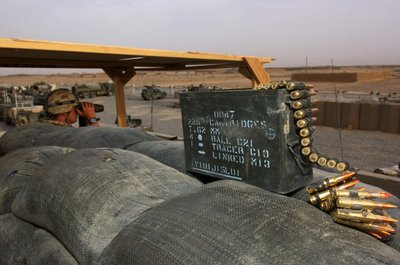 Canadian soldier at Kandahar
That is not my oil, that is not my beautiful car.
Originally publisihed September 4, 2006
Canadian soldiers are now involved in a NATO counter insurgency in Afghanistan. This summer, for the first time since Korea we saw Canadian soildiers in a fire-fight. How did we get here?
Well, 9/11 happened - Al-Qaeda was blamed. The government of Afghanistan, the Taliban, aided and abetted them. On October 7 the area bombing of Taliban strong-holds began. The Americans supported one of several groups fighting in parts of Afghanistan. The Northern Alliance and others formed a provisional government on April 18, 2002; officially ousting the Taliban; and institutionalizing US primacy in Central Asia.
Canadian troops were sent by the Liberal government of Jean Chretien in 2002; to fill a power vacuum created by US bombing, and to rebuild the country after 10 years of Soviet occupation and 10 more years of civil war.
Four years later the Taliban have regrouped. What we are doing there now, in no way resembles peace keeping or reconstruction. Canadian soldiers are involved in a NATO counter insurgency. Its time to take stock.
How did we get here, why are we trying to kill them? Oh yes.., 'the Taliban aided and abetted Al-Qaeda'.
The Taliban are no friends to democracy, rule of law, the enlightenment, or equal rights. They desire a theocracy like the Dark Ages(400 - 1600AD) - when Rome projected terror across Europe to maintain its' primacy - not anything like the German Fascism of the 1930's and '40's the Whitehouse keeps pumping. Neither are they friends of an oil pipeline on the northern border. A pipeline that would send regional resources west, to the USA; or the 'Great Satan', in their vernacular.
I personaly wouldn't support a government like that; but that doesn't mean I would go to war with them either.
The Taliban stopped the opium crop when they were in power, something we cannot seem to do. The Taliban have never invaded a foreign land; they are not even a regional power. At this time, a multi-polar global power negotiation is in progress; Taliban rule, while hard to stomach could be a stabilizing force right now. The alternative, an unwinnable urban war could become much worse.
Tolerating the de-facto situation in Afghanistan is not defeat, its clear thinking. Canada, as a member NORAD and a transmogrified NATO should push for another way.
We could have cut a deal with the Taliban in 2001; we may need to now. Before more blood is spilt, NATO's political leaders should talk with the Taliban who controlled 90% of the country pre-9/11.
A US 'No Fly Zone' would project Imperial tranquility with-in a schematic borrowed from British imperial history; a step 'back to the future', towards the G-8 model of the balance of powers pre 9/11. To facillitae this the Americans have to recognise Russian control of her oil industry; just as congress blocked China from buying UNICOL the largest energy company in the world(US), the Russians are protecting their national interest, albeit with slight of hand and 'lawyering'.
A 'No Fly Zone' would facilitate an intelligence net and the ability for the US to project influence on the Taliban government; and to maintain their primacy with-out Al Qaeda or other forces. It would continue to fortify and stabilize the Northern Alliance, and with Russian help, ensure passivity along the northern border; bringing relative stability to the entire region.
We need to deal. The question is, do the Taliban still want to make a deal, now that they have us perplexed militarily? The road out will hurt more than the road in; but less than an unending counter-insurgency amongst an increasingly desperate civilian population.
We have to make a deal. With in a model that recognizes American primacy we can propose: give the Taliban power with-in a new US hegemony that recognizes the strategic importance of the northern frontier and the impropriety of tolerating Al Qaeda's presence. This would serve all the demands of Bush's' 'war on terrorism' and the underlying strategic objective: an stable oil pipel ine corridor to Turkey.One problem with this plan is that the Northern Alliance and the Taliban were at war pre 9/11. The Taliban may have been involved in the assassination of the Alliances top field commander, Ahmed Shah Masood. But the reality of the situation is that they would have no choice but to accept the power. Undoubtedly they would display a genuine front while perusing other agenda. This is standard when empires try to project their will.
All this speaks to the complex inter-dependencies present, in the largest geo-political sense. Canada with its vast oil and gas reserves, has very little interest in any of these machinations, aside from one.
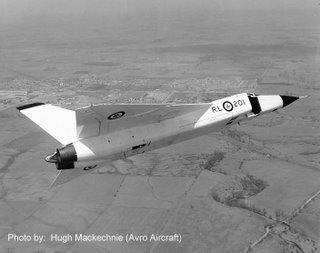
We need another assembly line at the Oakville Car Plant. In jest of coarse, but it represents a critical part of our Strategic National Interest. The basis of the post war affluence in Canada was the Auto-Pact. Canada traded leading Jet technology and expertise to the Americans for a share in the American automobile market and other things. This guaranteed Canada's post war affluence; and Americas primacy in air power and space power.If we continued the "head in the sand", Jean Chretien strategy of doing as little as possible while continually telling the Americans they're too loud, the USA might restrict trade with-in a post 9/11 xenophobic reaction.
American protectionism is not on the political front burner right now in Washington, instead it's been over shadowed by a ugly drift towards persecution of non-citizens, witnessed by the massive Latino demonstrations around the still stalled immigration bill. Illuminating just how important citizenship has become to protecting ones self from both real and perceived new anti-terrorism powers of the state.
 60% of Americans polled think their army should be out of the Iraq debacle. They can hardly be vitriolic now if we suggest a different coarse. In fact we might be their best friends again by 2008. We should lead and innovate now, be the honest broker.
This congressional election year, the Whitehouse is easing up on the rhetoric and is trying to look more conciliatory. Surrounded by litigation and corruption scandals all around, and a quagmire in Iraq, the administration might be willing to talk.
Lets make a deal!c
Originally published September 4, 2006 in michaelhollowaysblog.Canadian soldier at Kandahar
"That is not my house, That is not my beautiful car."
Canadian soldiers are now involved in a NATO counter insurgency in Afghanistan. This summer, for the first time since Korea we saw Canadian soldiers in a fire-fight.
How did we get here?
Short Form: 9/11 happened - Al-Qaeda was blamed. The government of Afghanistan, the Taliban, aided and abetted them. On October 7 the area bombing of Taliban strong-holds began. The Americans supported one of several groups fighting in parts of Afghanistan. The Northern Alliance and others formed a provisional government on April 18, 2002; officially ousting the Taliban; and institutionalizing US primacy in Central Asia.
Canadian troops were sent by the Liberal government of Jean Chretien in 2002; to fill a power vacuum created by US bombing, and to rebuild the country after 10 years of Soviet occupation and 10 more years of civil war.
Four years later the Taliban have regrouped. What we are doing there now, in no way resembles peace keeping or reconstruction. Canadian soldiers are involved in a NATO counter insurgency. Its time to take stock.
How did we get here, why are we trying to kill them? Oh yes.., 'the Taliban aided and abetted Al-Qaeda'.
The Taliban are no friends to democracy, rule of law, the enlightenment, or equal rights. They desire a theocracy like the Dark Ages(400 - 1600AD) - when Rome projected terror across Europe to maintain its' primacy - not anything like the German Fascism of the 1930's and '40's the White House keeps pumping. Neither are they friends of an oil pipeline on the northern border. A pipeline that would send regional resources west, to the USA; or the 'Great Satan', in their vernacular.
I personally wouldn't support a government like that; but that doesn't mean I would go to war with them either.
The Taliban stopped the opium crop when they were in power, something we cannot seem to do. The Taliban have never invaded a foreign land; they are not even a regional power. At this time, a multi-polar global power negotiation is in progress; Taliban rule, while hard to stomach could be a stabilizing force right now. The alternative, an un-winnable urban war that could become much worse.
Tolerating the DE-facto situation in Afghanistan is not defeat, its clear thinking. Canada, as a member NORAD and a transmogrified NATO should push for another way.
We could have cut a deal with the Taliban in 2001; we may need to now. Before more blood is spilt, NATO's political leaders should talk with the Taliban who controlled 90% of the country pre-9/11.
A US 'No Fly Zone' would project Imperial tranquility with-in a schematic borrowed from British imperial history; a step 'back to the future', towards the G-8 model of the balance of powers pre-9/11. To facilitate this the Americans have to recognise Russian control of her oil industry; just as congress blocked China from buying UNICOL the largest energy company in the world (US), the Russians are protecting their national interest, albeit with slight of hand and evil 'lawyering'.
A 'No Fly Zone' would facilitate an intelligence net and the ability for the US to project influence on the Taliban government; and to maintain their primacy with-out Al Qaeda or other forces. It would continue to fortify and stabilize the Northern Alliance, and with Russian help, ensure passivity along the northern border; bringing relative stability to the entire region.
We need to deal. The question is, do the Taliban still want to make a deal, now that they have us perplexed militarily? The road out will hurt more than the road in; but less than an unending counter-insurgency amongst an increasingly desperate civilian population.
We have to make a deal. With in a model that recognizes American primacy we can propose: give the Taliban power with-in a new US hegemony that recognizes the strategic importance of the northern frontier and the impropriety of tolerating Al Qaeda's presence. This would serve all the demands of Bush's' 'war on terrorism' and the underlying strategic objective: an stable oil pipe-line corridor to Turkey.One problem with this plan is that the Northern Alliance and the Taliban were at war pre-9/11. The Taliban may have been involved in the assassination of the Alliances top field commander, Ahmed Shah Masood. But the reality of the situation is that they would have no choice but to accept the power. Undoubtedly they would display a genuine front while perusing other agenda. This is standard when empires try to project their will.
All this speaks to the complex inter-dependencies present, in the largest Geo-political sense. Canada with its vast oil and gas reserves, has very little interest in any of these machinations, aside from one. We need another assembly line at the Oakville Car Plant.
In jest... But it represents a critical part of our Strategic National Interest. The basis of the post war affluence in Canada was the Auto-Pact. Canada traded leading Jet technology and expertise to the Americans for a share in the American automobile market, and other things. This guaranteed Canada's post war affluence; and Americas primacy in air power and later, in space power.
If we had continued the Jean Chretien, "head in the sand" strategy, doing as little as possible while continually telling the Americans they're too loud, the USA might have restricted trade -- in a post 9/11 xenophobic reaction.
American protectionism is not on the political front burner right now in Washington, instead it's been over shadowed by a ugly drift towards persecution of non-citizens, witnessed by the massive Latino demonstrations around the still stalled immigration bill. Illuminating just how important citizenship has become to protecting ones self from both real and perceived new anti-terrorism powers of the state.
60% of Americans polled think their army should be out of the Iraq debacle. They can hardly be vitriolic now if we suggest a different coarse. In fact we might be their best friends again by 2008. We should lead and innovate now, be the honest broker.
This congressional election year, the Whitehouse is easing up on the rhetoric and is trying to look more conciliatory. Surrounded by litigation and corruption scandals all around, and a quagmire in Iraq, the administration might be willing to talk.
Lets make a deal!mh


